
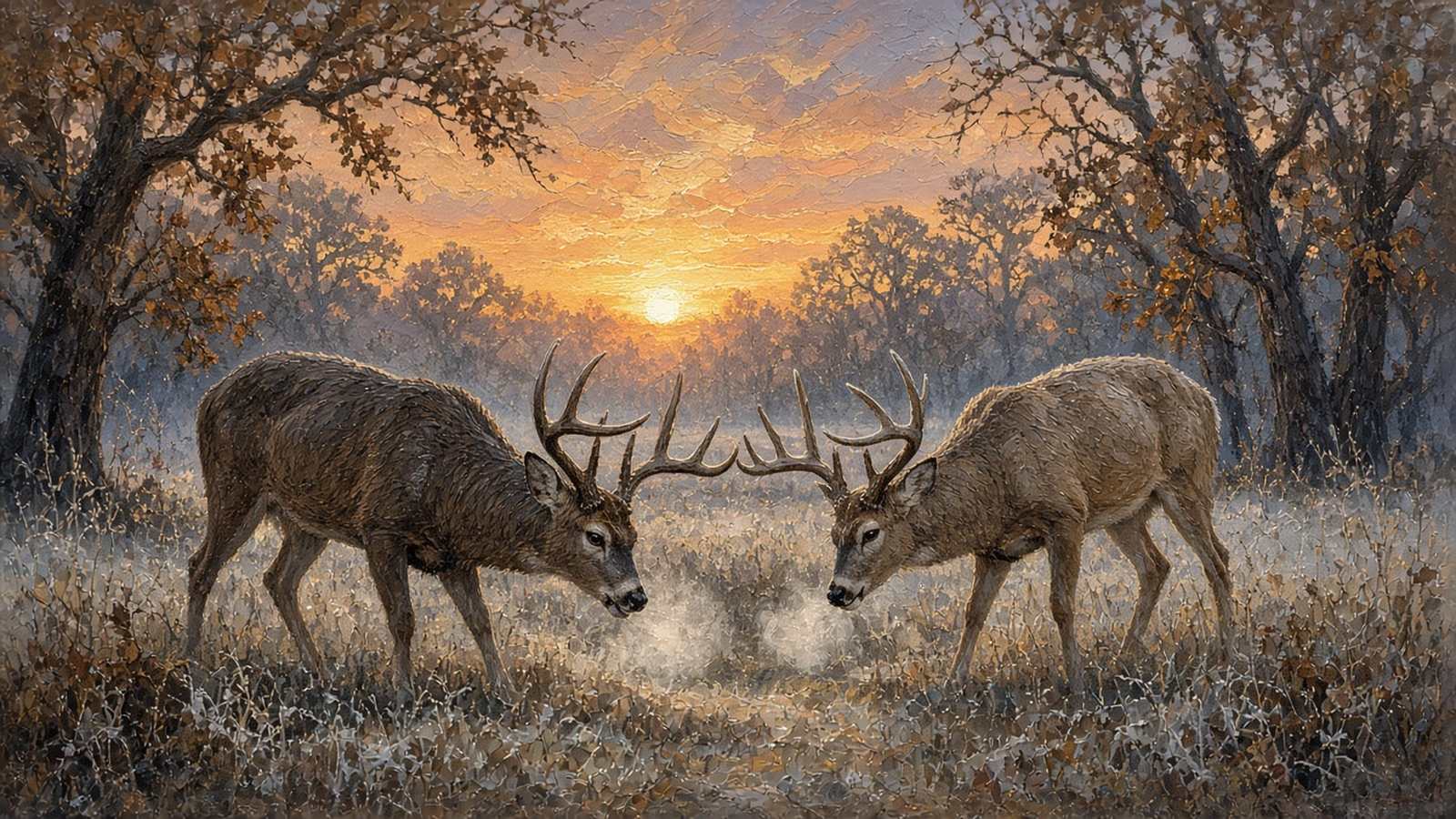
Bucks don't answer calls the same way all fall. In the best study we found, response to rattling was lowest in the pre-rut, highest at the peak, and the oldest bucks answered most after the peak. Here's what research shows, and how hunters and writers adjust their calling through each phase.
The call I carry is the Illusion Extinguisher, an adjustable grunt tube. For calling basics, see our when and how to call deer guide. Everything below is researched, with sources at the end.
What the rattling research found
The best data on how bucks respond to calling through the rut comes from a study by Mickey Hellickson and colleagues in South Texas, published by the Southeastern Association of Fish and Wildlife Agencies. Researchers rattled 171 times from 1992 to 1995 and watched 111 bucks respond. They found:
- Response was highest during the rut and lowest in the pre-rut.
- Loud rattling drew nearly three times as many bucks as quiet rattling. Length of the sequence made no difference.
- Most responses came in the first 10 minutes.
- Age mattered. Young bucks (1.5 to 2.5) responded most in the pre-rut, middle-aged bucks (3.5 to 4.5) during the rut, and mature bucks (5.5 and up) most in the post-rut. The authors think mature bucks responded less during the rut because they were busy with does.
- Bucks didn't seem to learn to avoid rattling.
The National Deer Association's summary of the study adds a practical tip from Hellickson: start soft on your first sequence so you don't spook a deer that's close, then rattle loud. The NDA also notes the study area had a balanced buck age structure, and response rates there were high (65 percent overall). Expect less where there are fewer older bucks.
For which rattling tool to carry and how to run a rattling sequence, see rattling: antlers vs rattle bags.
Do bucks "lock down" at peak rut?
Many hunters see fewer bucks at the peak and call it lockdown. NDA reports that researcher Andy Olson saw no sign of it in three GPS-collared mature bucks in Pennsylvania. During the peak rut, he said, "these deer were just crazy. They were all over the place." His explanation for disappearing bucks is that they shift to a different part of their range. It's a small sample, which NDA notes.
Deer & Deer Hunting describes tending, when a buck stays with one doe until she's bred, as usually lasting about 24 hours. A tending buck is hard to pull away, so calling is a better bet once he's back to seeking.
Calling by phase
The tactics below are hunter and writer advice, attributed. The study above backs the broad pattern: more response at the peak, older bucks more in the post-rut.
| Phase | What bucks are doing | What writers suggest |
|---|---|---|
| Pre-rut | Sparring, rubbing, few does ready | Light rattling, contact grunts. Game & Fish warns that blind calling can bring a buck in from downwind. |
| Seeking and chasing | Cruising for does, chasing | Grunts, bleats and rattling. Game & Fish suggests starting reserved and building up. |
| Tending | With one doe | Hard to call. Soft grunts at a buck between does. |
| Post-rut | Worn down, some does recycle | Field & Stream's source suggests more bleats and less intensity. |
A few specifics:
- Pre-rut. Game & Fish calls it a good time to provoke a frustrated buck with grunts or a snort-wheeze, but warns that a buck may slip in from downwind.
- Peak. One Game & Fish writer uses a trailing grunt: 8 to 15 short grunts, then a long one, every 15 to 20 minutes.
- Post-rut. Field & Stream quotes a caller named Kirby on does that weren't bred coming back into heat about a month later. He shifts to bleats, such as five or six bleats followed by one or two grunts, and backs off as the season winds down.
What to carry
| Call | Use | Link |
|---|---|---|
| Grunt tube | Contact and tending grunts all season | Illusion Extinguisher (mine) |
| Doe bleat can | Estrus bleats, post-rut | Primos Original Can |
| Rattle bag | Rattling without carrying antlers | Primos Big Bucks Bag |
For price and quality differences between calls, see grunt calls, budget vs premium.
Keep the bow in reach when you call, since Hellickson found most bucks came in the first 10 minutes.
Other good options
- Rattling antlers instead of a bag. Since loud rattling drew the most bucks in the study, use whatever lets you rattle loud.
- Watch the wind. Game & Fish notes bucks often work toward a call from the downwind side. Set up so that side is open and visible. See hunting the wind.
Questions hunters ask
When is the best time to rattle? In the Texas study, the rut had the highest response. Mature bucks responded most in the post-rut.
Should I call blind? Game & Fish warns blind calling in the pre-rut can pull a buck in downwind. Calling to a buck you can see lets you read his reaction.
Does rattling educate deer? The Hellickson study found bucks didn't appear to learn to avoid it.
Sources
- Hellickson et al., "Behavioral Responses of Male White-tailed Deer to Antler Rattling," SEAFWA: https://seafwa.org/sites/default/files/journal-articles/Hellickson-7-10.pdf
- National Deer Association, "10 Tips for Rattling More Bucks Using Science": https://deerassociation.com/10-tips-rattling-bucks/
- National Deer Association, "Is the Lockdown Phase a Myth?": https://deerassociation.com/lockdown-phase-myth/
- Deer & Deer Hunting, "How to Predict the Best Days of the Rut": https://www.deeranddeerhunting.com/deer-hunt/deer-hunting-tips/how-to-predict-the-best-days-of-the-rut-for-deer-hunting
- Game & Fish, "What to Know About the Five Stages of the Whitetail Rut": https://www.gameandfishmag.com/editorial/everything-you-need-to-know-whitetail-rut/453637
- Game & Fish, "Deer-Calling Tactics For Each Phase of the Rut": https://www.gameandfishmag.com/editorial/deer-calling-tactics-for-each-phase-of-the-rut/453572
- Field & Stream, "How to Call Whitetails During Each Phase of the Season": https://www.fieldandstream.com/hunting/how-to-call-whitetails